What’s the smartest way to handle fumes from a laser engraver: a comparative look
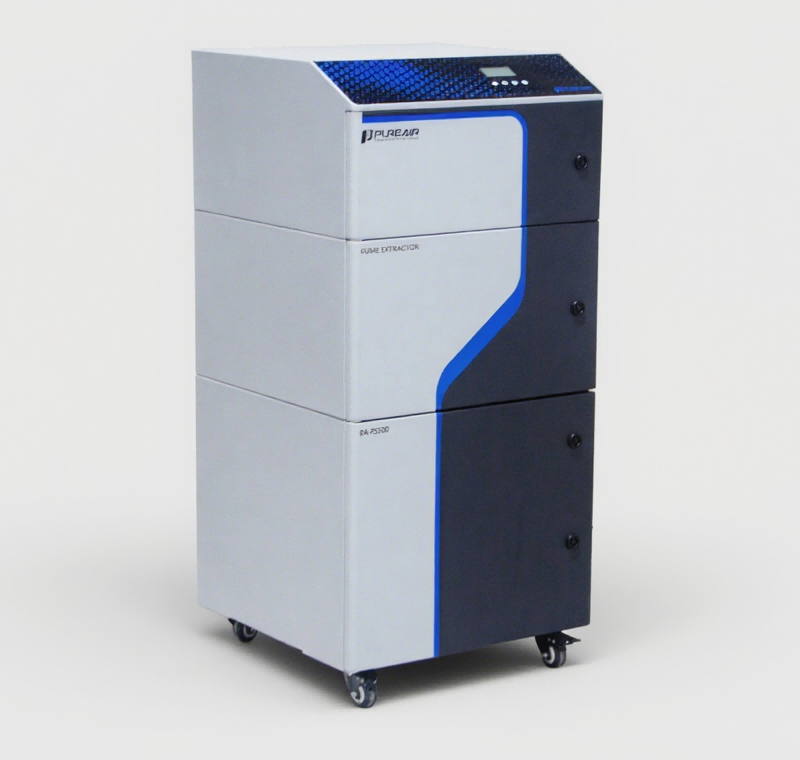
Introduction — scenario, data, question
Have you ever stood in a tiny workshop and wondered whether the smoke you smell is quietly doing harm? I’ve seen makers, small-business owners, and hobbyists wrestle with that exact worry — and the numbers are telling: many community surveys report that more than half of laser users notice persistent odors and irritation after sessions. A proper laser engraver fume extractor sits at the center of that debate: it’s the difference between a tolerable workspace and one where eyes water and materials off-gas hazardous VOCs. (We talk about filtration, capture efficiency, and noise levels — but what truly matters is health and usability.) Given limited budgets and tight shop space, what trade-offs should we accept and which designs should we reject outright? Let’s walk through the practical choices and real consequences so you can make a calm, informed decision — and then move on to the deeper technical trade-offs below.
Part 2 — deeper layer: flaws in traditional solutions and hidden user pain points
When I test a system, I start by installing a laser engraver air purifier and watching how it performs across jobs. Too often the old solutions promise “clean air” but fail on three fronts: poor capture at the source, clogged filter media that chokes airflow, and overlooked byproducts like ultrafine particles or reactive gases that a simple HEPA can’t handle. Look, it’s simpler than you think — a box with a fan does not equal a complete solution. In practice, many users report that after six months the unit’s airflow halves because of particle loading, and that VOC odors persist despite a HEPA-only approach. That’s not just annoyance; it’s a symptom of mismatched filtration (HEPA, activated carbon, and sometimes catalytic stages are needed) and insufficient static pressure to capture fumes close to the cutting zone.
Technically speaking, capture efficiency depends on three variables: nozzle placement (proximity to the cutting plume), fan CFM and static pressure, and the filter chain (pre-filter, HEPA, activated carbon, and sometimes chemisorption elements). I’ve seen systems with good HEPA ratings but poor activated carbon mass — they remove particles but not smell or VOCs. Add to that real-world pain points: noisy blowers, complex maintenance, and replacement filter cost. Users often underbudget for filter replacement and overestimate how long a single filter will last. There’s also the issue of sensor mismatch — cheap VOC sensors give false comfort. My job, frankly, is to call out these gaps so you can choose better: better capture geometry, real filter capacity, and validated airflow curves.
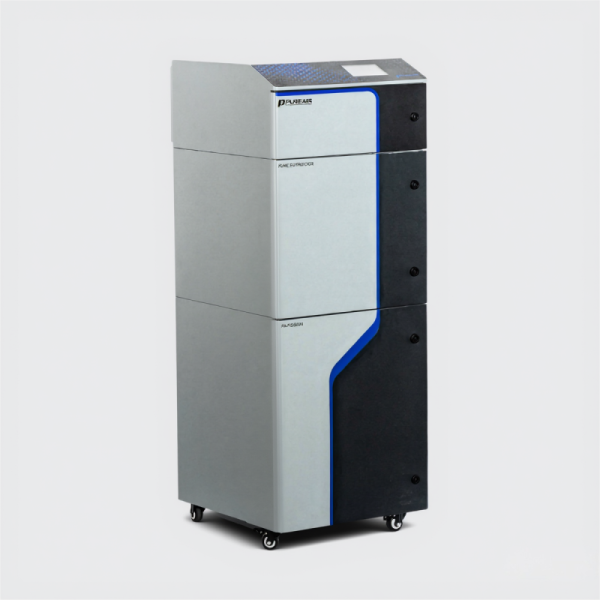 Why does capture geometry matter?
Because without targeted capture at the laser head, even the best filter will be chasing fumes across the room. Move the inlet a few inches closer and you’ll often cut required airflow by half — which saves energy, reduces noise, and extends filter life. That’s practical engineering, not marketing hype.
Part 3 — forward-looking: new technology principles and choosing the right system
Looking ahead, I focus on what actually improves daily use: balanced airflow design, multi-stage filter media, and smarter sensing. Modern laser engraver air purifier designs pair a near-head capture hood with a mid-volume fan and a layered filter pack — pre-filter, HEPA, and high-capacity activated carbon, sometimes augmented by UV-C for microbial control. The principle is simple: capture early, filter effectively, monitor continuously. I like systems that expose real metrics: CFM, static pressure curves, filter life estimates, and VOC plus particle readouts. These give you actionable maintenance windows instead of vague “change in six months” advice. — funny how that works, right?
From a practical standpoint, consider three forward-looking features: 1) modular filter cartridges so you replace only spent media; 2) calibrated sensors (particle counters and electrochemical VOC sensors) that link to a simple dashboard; and 3) engineered capture hoods designed for your gantry or desktop layout. These reduce downtime and overall cost of ownership. In trials, shops that adopted this layered approach saw lower odor complaints, longer filter intervals, and better worker comfort. I’ve witnessed projects go from “we tolerate the smell” to “we actually enjoy working here,” and that change matters.
What to measure next
Measure airflow at the inlet (CFM), check static pressure against manufacturer curves, and track VOC and particle counts over a week of varied jobs. Those numbers tell the story more honestly than marketing copy.
Closing — practical advice and evaluation metrics
In closing, I’ll offer three practical metrics I use whenever I evaluate a system: 1) Capture efficiency at the source (measured percent capture at intended nozzle distance), 2) Filter capacity and replacement cost (grams of activated carbon and HEPA rating versus expected hours of operation), and 3) Operational transparency (real sensor outputs, maintenance alerts, and vendor test data). Use these to compare real-world performance, not just specs on paper. I want you to leave with clear criteria, not confusion. If you pick systems by those three metrics, you’ll reduce odor issues, extend filter life, and create a healthier workspace — measurable benefits you’ll notice every day. For reliable options and more test data, I often point people toward trusted manufacturers like PURE-AIR.
Keep reading
 Real Estate
Smart Strategies for Navigating Today’s Real Estate Market: A Practical Guide for Buyers and Sellers
 Home
Home
Smart, Sustainable Garden Design: Practical Steps for a Beautiful Home Landscape
 Education